For brick-and-mortar retailers using Shopify and Shopify POS.
A shopper requesting directions, visiting your showroom and paying for an order has completed three different actions. Each can be useful to measure, but they answer different questions. Retail owners get clearer decisions when they distinguish customer interest, physical visits and recorded sales instead of calling all three conversions without explanation.
Reviewed and updated October 15, 2026.
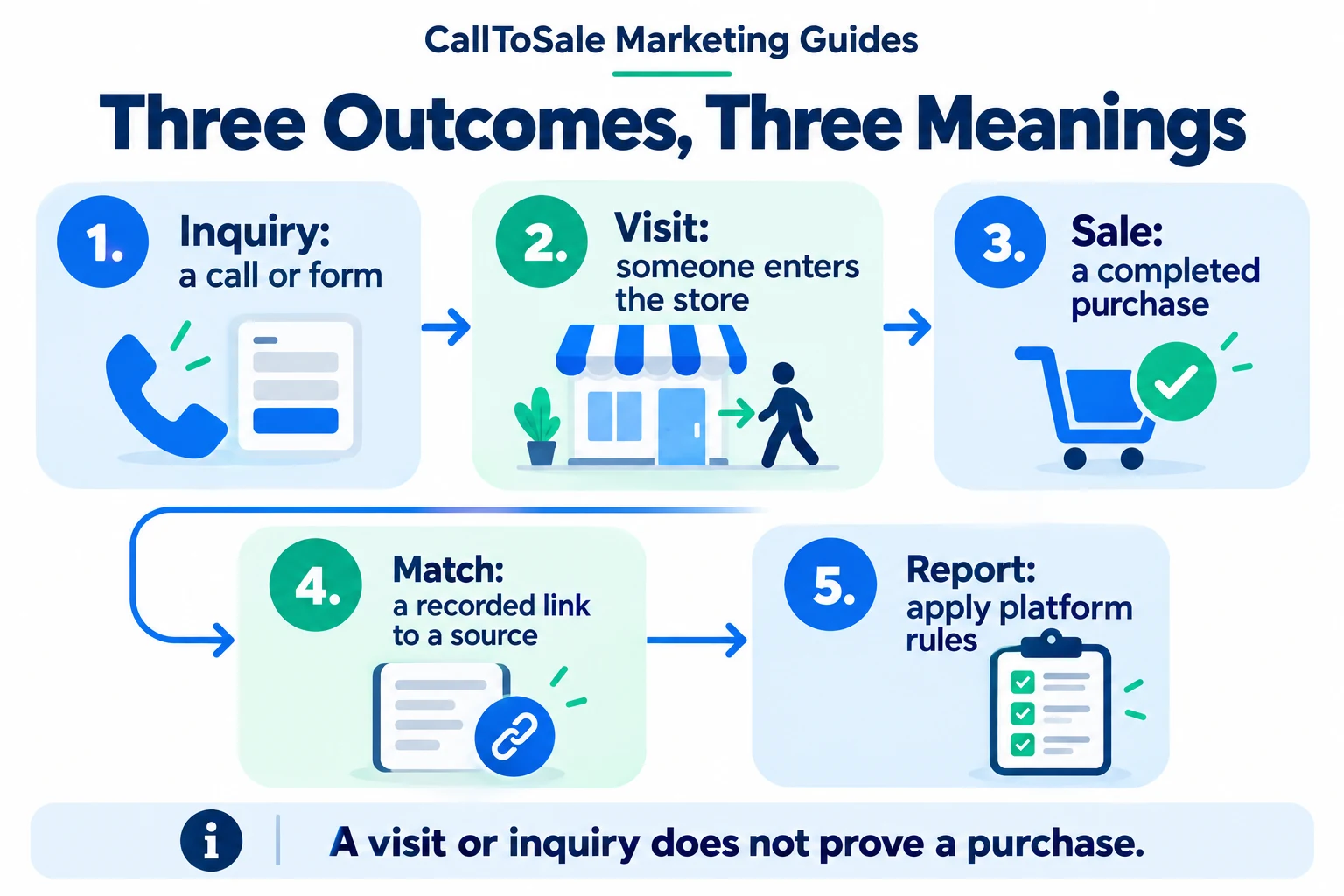
Open the full-size infographic
Use inquiries to understand demand
Calls and forms show that people are asking for something. Tag the purpose so stock questions, appointments and service requests remain distinguishable. Inquiry counts can help you identify staffing needs and common customer concerns. They do not establish purchase revenue. A campaign that generates many calls may need better lead qualification, better follow-up or more available inventory before those inquiries become store orders.
Use visits to understand store traffic
A visit can help you understand whether marketing is bringing people toward your location. It still does not reveal what each visitor purchased. Google describes its store visit conversion reporting as modeled and aggregated, with eligibility requirements. Keep that type of estimate separate from an order-level customer-to-purchase record. Do not describe every reported visit as an identified shopper or a confirmed sale.
Use POS orders to understand completed transactions
The store order contains the items, chosen value and transaction status used in your sales report. Decide how cancelled orders, exchanges, deposits and refunds affect your measure. For a showroom business, the meaningful event may occur days after the first visit. Retain that timing rather than assigning the purchase to whichever interaction happens to be easiest to export.
Add matching as a separate question
Even a valid purchase does not automatically reveal its marketing source. To connect an inquiry with a Shopify POS order, the configured workflow needs a reliable relationship between the records. An anonymous sale can remain a valid sale while being unmatched. Keep a visible unmatched category so the team can improve its checkout process without pretending attribution is complete.
Choose a dashboard that keeps the stages visible
Build separate rows for inquiries, appointments or visits where measured, completed orders and matched purchase value. Show the definition and period beside each number. If you assign a planning value to an intermediate action, label it as an estimate. Avoid adding the estimated value of a visit and the full purchase value together as if they were two independent sales.
Use the gap between stages to choose the next action
Consider a hypothetical mattress store with plenty of appointments but few completed purchases. The next review might focus on availability, customer fit or showroom follow-up rather than buying more traffic. A store with healthy sales but many unmatched orders has a different problem: record quality. The funnel helps identify the next operational question; it does not prove one explanation without further investigation.
How CallToSale can help your store
CallToSale reviews the connection between identifiable calls and forms, customer records and purchases recorded in Shopify POS. The standard service requires Shopify and Shopify POS. Your audit confirms the supported integrations, matching requirements and scope for your accounts. Missing identifiers and anonymous purchases can remain unmatched; the workflow does not guarantee attribution or increased revenue.
Keep learning
Further reading
Frequently asked questions
Is a directions request a sale?
No. It is a local action that can indicate interest in visiting; it does not establish a purchase.
Does a store visit mean the customer bought something?
No. A visitor might browse, collect information, accompany another shopper or leave without purchasing.
Are Google's store visits individual receipts?
No. Google's store visit reporting uses modeling and aggregation, rather than being a list of your individual checkout receipts.
Can I measure purchases without counting every visitor?
You can review recorded orders and a configured source-matching workflow separately from a complete physical footfall count.
Should calls and purchases have the same dashboard label?
Use clear stage labels so a call inquiry cannot be mistaken for a completed order.
Can a sale be real but unattributed?
Yes. A valid POS order can remain unmatched when the information needed to connect it to a marketing source is unavailable.
Should I add visit values and purchase values together?
Avoid presenting them as independent sales. Clearly distinguish estimated intermediate values from recorded order revenue.
Which measure should a retailer start with?
Define the business decision first, then keep demand, traffic, sales and matching quality visible as separate measures.
Find the gaps in your store sales tracking
Request a free Shopify POS sales tracking audit to review your inquiry, customer and order workflow. You can also see how CallToSale works, compare plans or browse the Marketing Guides.