Illustrative scenario. This is a hypothetical example, not an actual client testimonial or documented customer result.
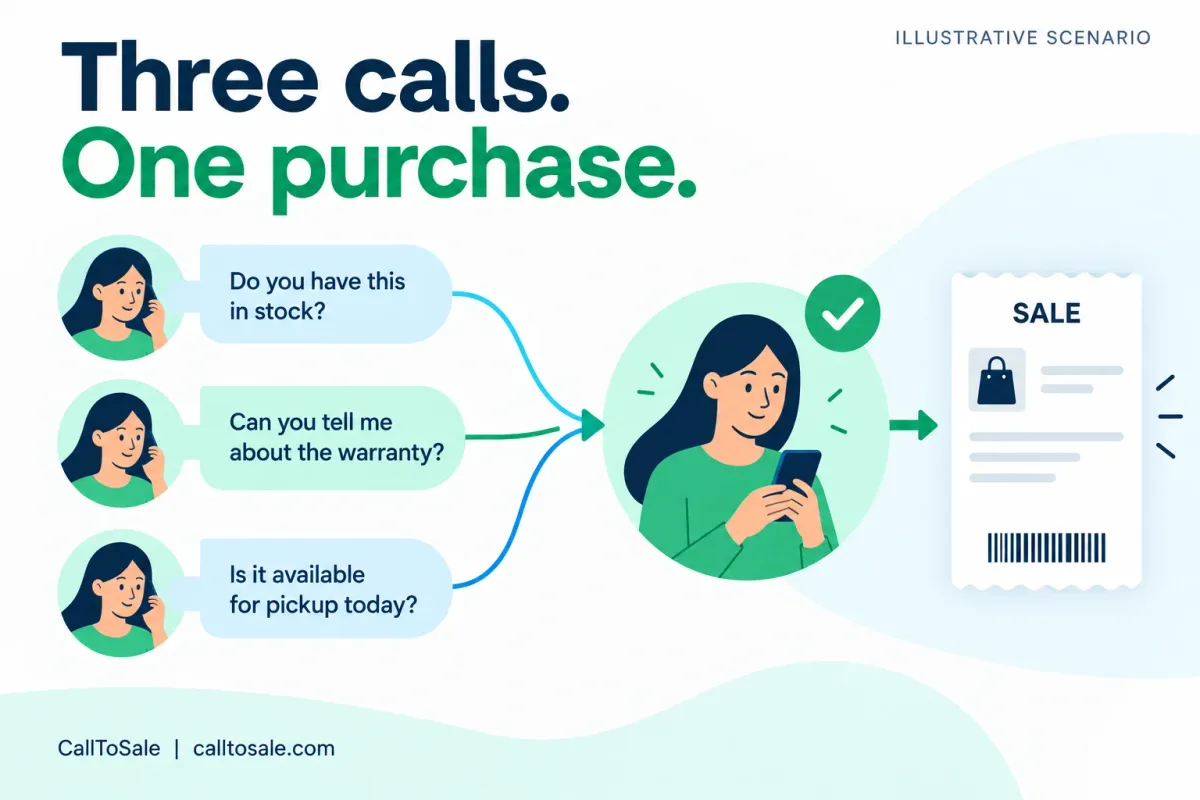
A fictional flooring showroom has a busy week. One shopper calls about samples, calls again about measurements, then calls a third time to confirm collection. The same shopper makes one purchase. At the weekly review, the owner sees several conversions and assumes several orders came from the campaign. The apparent success becomes confusing when the team compares it with the store receipts.
Published October 15, 2026. For businesses using Shopify and Shopify POS.
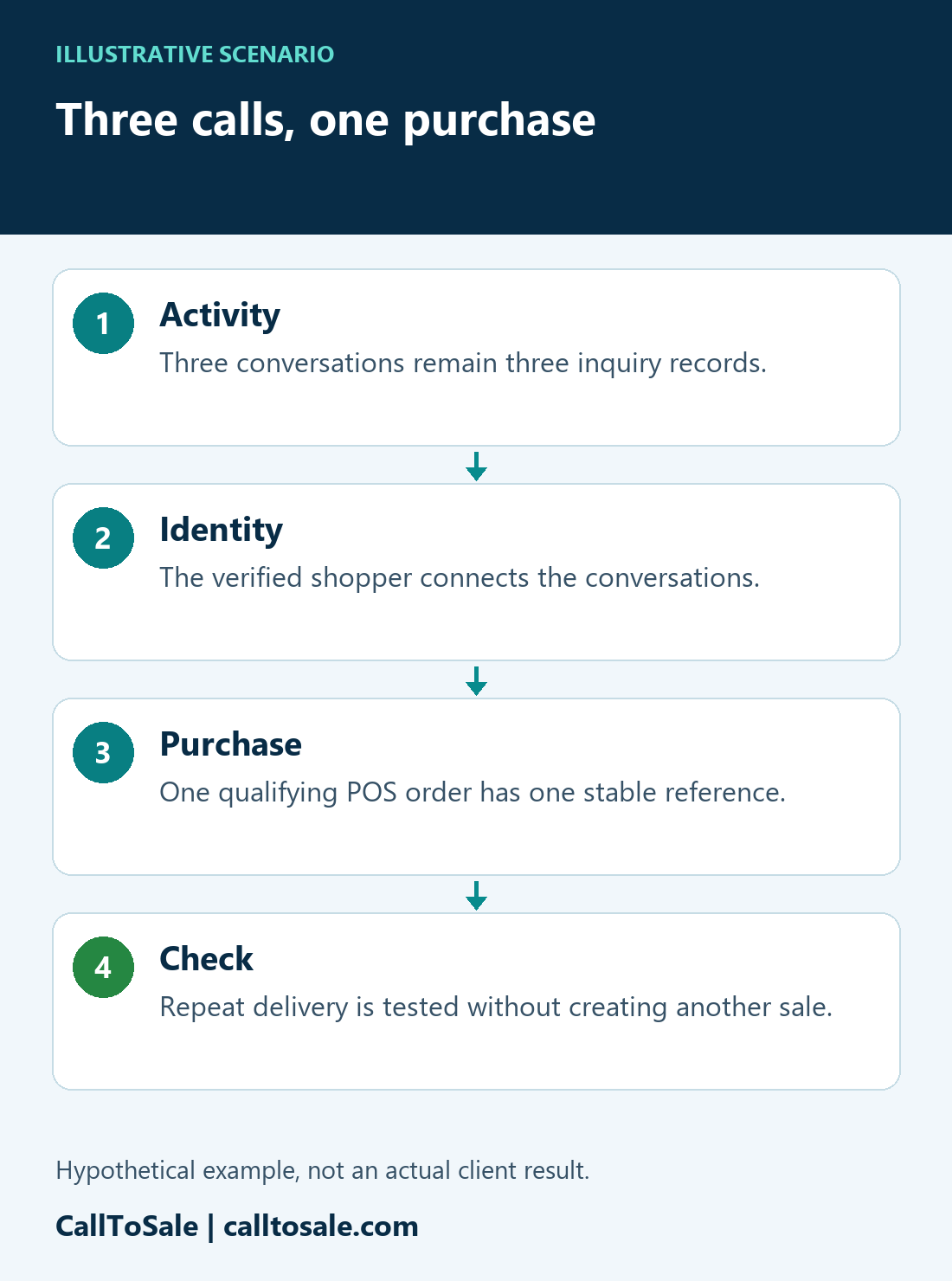
Real Life situations | Illustrative scenarioThree calls, one purchaseThe proposed checks in this hypothetical journey.- 1ActivityThree conversations remain three inquiry records.
- 2IdentityThe verified shopper connects the conversations.
- 3PurchaseOne qualifying POS order has one stable reference.
- 4CheckRepeat delivery is tested without creating another sale.
Illustrative scenario, not an actual client result. Matching and reporting depend on available evidence and the configured integration.
Open the full-size scenario infographic
Useful activity can still be the wrong sales measure
Each conversation may represent progress. None automatically creates another purchase. We would ask what each conversion action means, whether the displayed total combines inquiries with sales, and whether the store is interpreting an activity count as an order count. Before changing integration rules, the team should agree which outcome answers the business question. A call count and a completed-order count can both be valid while describing different things.
Trace the order behind the activity
CallToSale would inspect an authorized sample from the first inquiry through the later contacts to the Shopify POS order. The fictional shopper would have one verified customer relationship, with each conversation retaining its own activity record. The order would retain its stable purchase reference. Combining the phone logs should not delete useful history; separating the outcome should not erase the fact that three calls were handled.
Give the purchase its own identity
The proposed reporting design would distinguish inquiry events from the purchase event. It would use the configured stable order or event reference to help recognize repeated delivery of the same purchase. The exact deduplication behavior depends on the destination and integration. We would test it instead of assuming that every advertising platform treats repeated uploads in the same way.
Check payments as well as calls
A flooring order might involve a deposit and later balance. If the workflow creates a purchase every time money is collected, fixing the call labels alone leaves another duplicate-counting path. We would confirm the agreed order status and revenue definition, then inspect whether payment events reference the same order. A refund or cancellation would need its own documented handling rather than a new positive sale.
Verify the correction in a controlled test
The test would include the initial order, a repeat notification for that order, another phone inquiry, and a separate genuine order. The expected internal report would keep the inquiry history while showing each qualifying purchase once. Advertising delivery and destination credit would be checked separately. If earlier reporting was wrong, the team would assess supported corrections rather than deleting logs or inventing replacement events.
The operational benefit
A clean distinction would help the owner ask better questions: how much inquiry activity did the team handle, how many orders followed, and how much revenue was recorded? This example does not claim a performance improvement. It shows why clearer definitions can prevent a lively phone line from being mistaken for multiple purchases.
Related practical guides
Find the missing step in your store
Book a free sales tracking audit to review your inquiry, customer, and Shopify POS order workflow. Explore Real Life situations for more clearly labeled hypothetical examples.