Illustrative scenario. This is a hypothetical example, not an actual client testimonial or documented customer result.
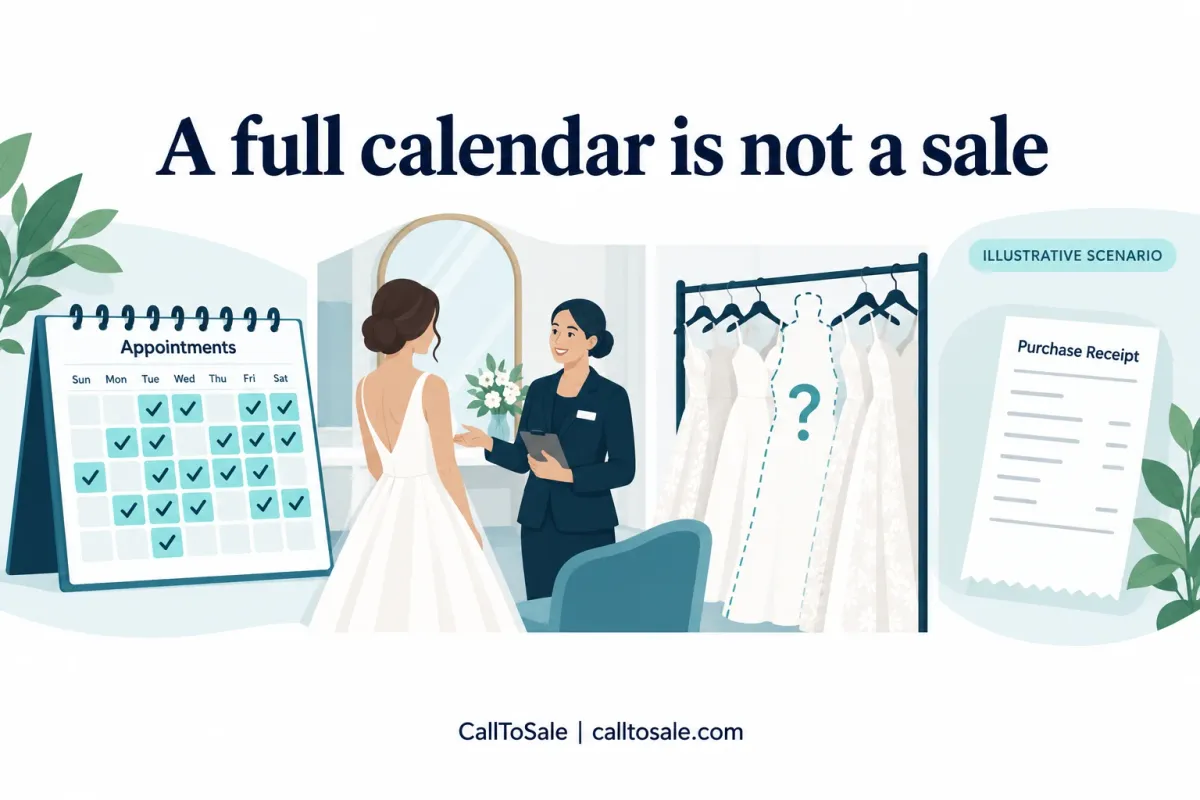
A fictional bridal showroom celebrates a full appointment calendar. Advertising reports show inquiries and bookings, but recorded purchases do not rise in the way the owner expected. Staff feel busy, shoppers seem interested, and the campaign looks strong if success means appointments. The owner needs to know which part of the journey is failing before paying for more demand.
Published October 15, 2026. For businesses using Shopify and Shopify POS.
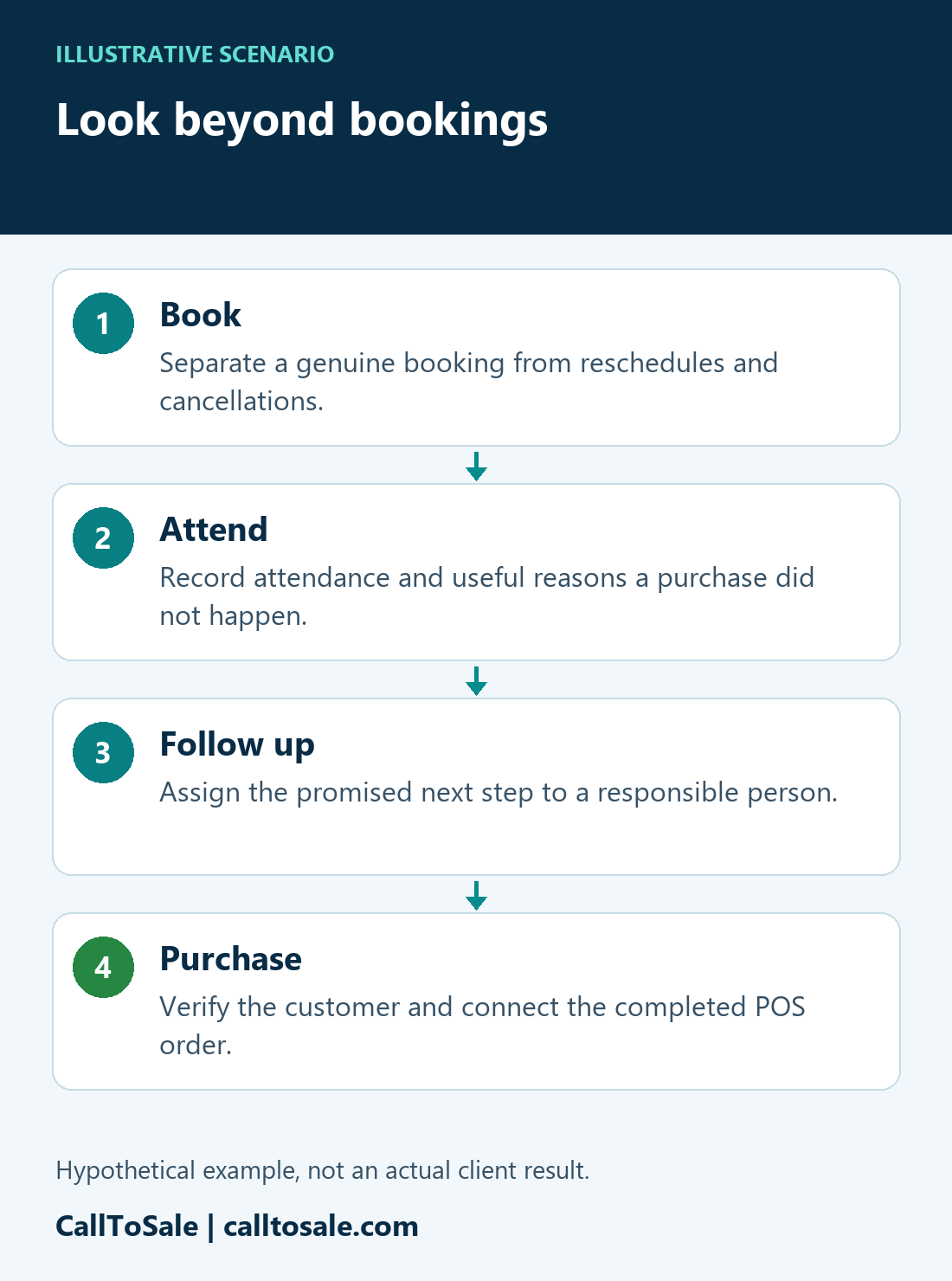
Real Life situations | Illustrative scenarioLook beyond bookingsThe proposed checks in this hypothetical journey.- 1BookSeparate a genuine booking from reschedules and cancellations.
- 2AttendRecord attendance and useful reasons a purchase did not happen.
- 3Follow upAssign the promised next step to a responsible person.
- 4PurchaseVerify the customer and connect the completed POS order.
Illustrative scenario, not an actual client result. Matching and reporting depend on available evidence and the configured integration.
Open the full-size scenario infographic
A booking is a stage, not the final outcome
CallToSale would map inquiries, bookings, attendance, quotes or product discussions, and completed Shopify POS orders as separate stages. The first review would ask whether the team records cancellations, rescheduled appointments, and no-shows consistently. Counting each reschedule as a new opportunity would exaggerate activity. Declaring every attended visit a sale would hide the commercial outcome the owner actually wants to understand.
Verify what happened during the visit
In this fictional example, some appointments involve products that are unavailable in the requested size or delivery period. Other shoppers need time to decide. Staff would record a useful next step and the relevant reason a purchase did not occur, without collecting unnecessary personal details. A short set of consistent reasons is more useful than a long free-text story nobody reviews.
Keep follow-up connected to the inquiry
The configured HighLevel workflow could organize the appointment conversation and assigned follow-up. A reminder or automated acknowledgment is not the same as answering the shopper's question. The team should confirm who will provide the promised information and when. Contact preferences still apply. Repeated reminders should not be treated as evidence of customer readiness to buy.
Connect completed orders without inventing them
When a shopper eventually purchases, staff would verify the correct customer and attach that customer to the actual Shopify POS order. The report would preserve the real order date and agreed sales value. A purchase made weeks after the appointment should be distinguished from a same-day outcome. Uncertain customer relationships should remain unmatched instead of being assigned to the busiest campaign.
Use the pattern to choose a specific intervention
If many booked shoppers do not attend, appointment expectations or reminders may need review. If attendees consistently cannot buy suitable stock, increasing traffic may amplify the problem. If useful follow-up is missing, ownership is the next issue. If orders exist but are disconnected, the reporting handoff needs attention. These are hypotheses to test, not promised improvements from installing another tool.
What the owner could review each week
A practical review would compare the same stages over consistent periods, allow for purchase delays, and inspect a small sample of unresolved journeys. The owner would see where the evidence points before changing budgets. This hypothetical case contains no client quote or revenue-lift claim. Its lesson is to measure the step that needs improvement rather than treating a full calendar as proof of more sales.
Related practical guides
Find the missing step in your store
Book a free sales tracking audit to review your inquiry, customer, and Shopify POS order workflow. Explore Real Life situations for more clearly labeled hypothetical examples.