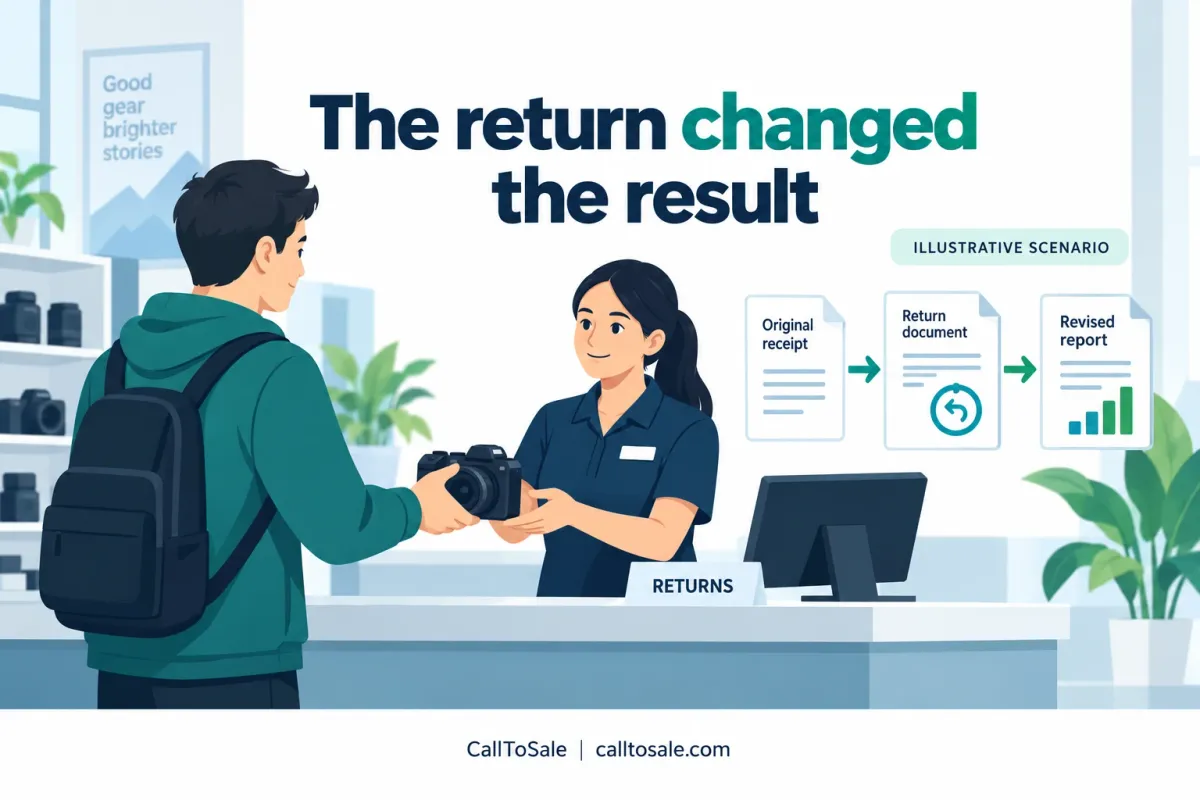
Illustrative scenario. This is a hypothetical example, not an actual client testimonial or documented customer result.
A fictional camera store connects a campaign inquiry to a completed purchase. The shopper later returns the camera under the store's return policy. Shopify records the refund, but a marketing export still shows the original purchase value. The owner sees a stronger campaign result than the net sales evidence supports. The problem is not whether the customer originally bought. It is whether later changes reach the reports that depend on the purchase.
Published October 15, 2026. For businesses using Shopify and Shopify POS.
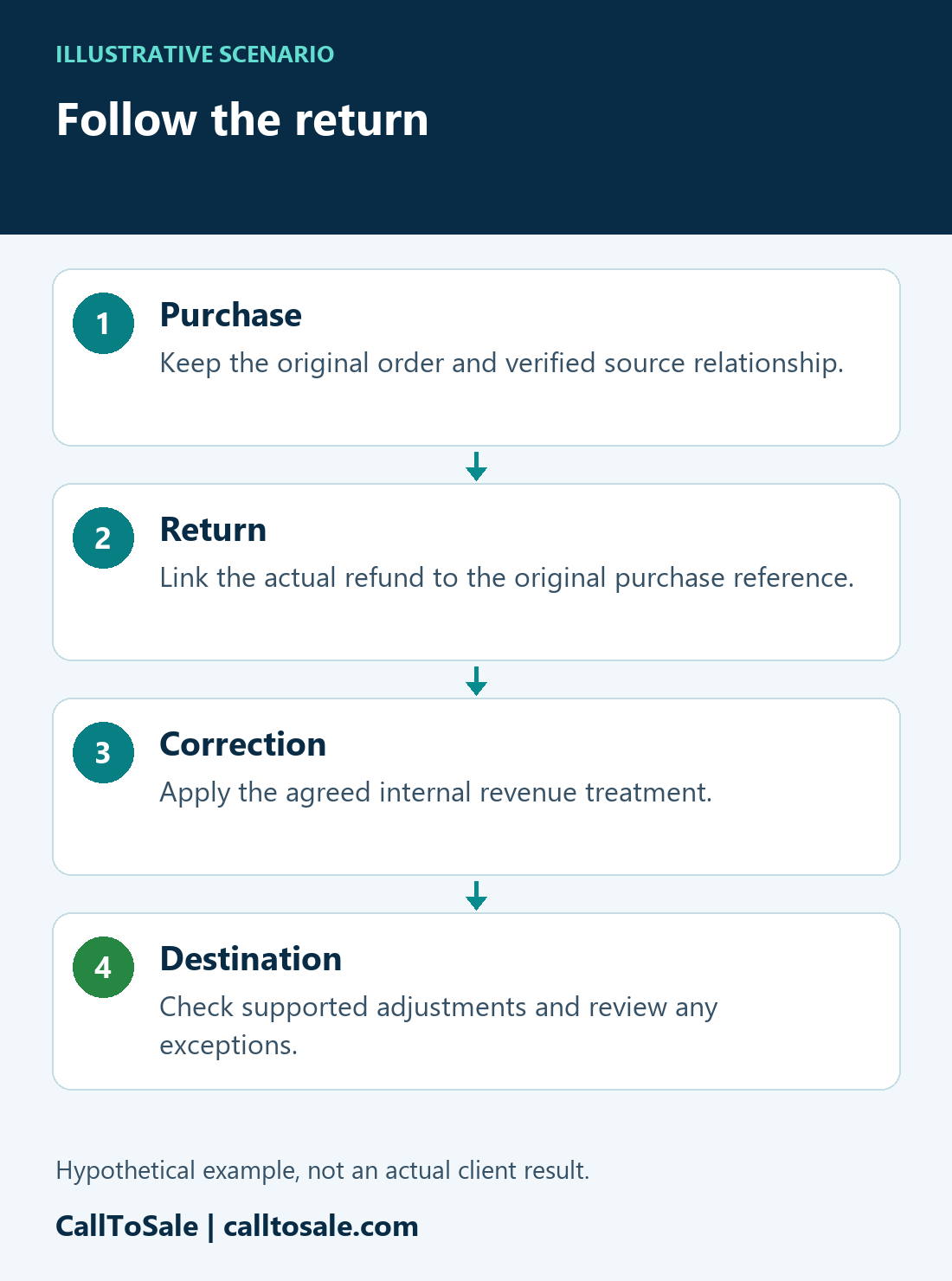
Real Life situations | Illustrative scenarioFollow the returnThe proposed checks in this hypothetical journey.- 1PurchaseKeep the original order and verified source relationship.
- 2ReturnLink the actual refund to the original purchase reference.
- 3CorrectionApply the agreed internal revenue treatment.
- 4DestinationCheck supported adjustments and review any exceptions.
Illustrative scenario, not an actual client result. Matching and reporting depend on available evidence and the configured integration.
Open the full-size scenario infographic
Choose the revenue question explicitly
CallToSale would confirm whether the report is intended to show gross order value, collected payments, or revenue after the agreed refund treatment. Those measures answer different questions. A report can retain the original sale for historical analysis while separately showing returns. The misleading part is calling a gross figure net revenue or silently comparing reports with different definitions.
Follow the original order reference
The team would locate the original Shopify POS order and the relevant refund records through authorized account access. The correction needs a dependable relationship to the purchase, especially when only part of an order is returned. A similar product, customer name, or refund amount is not a sufficient substitute for the actual order relationship. Original transaction history should remain traceable.
Update the internal view consistently
In the proposed workflow, the order's reporting record would reflect the agreed treatment of the return. Partial refunds, taxes, shipping, and exchanges need documented handling rather than an assumed full reversal. The original customer and marketing-source relationship should not change merely because the revenue value changes. The store should be able to explain both the initial purchase and the later correction.
Check what the advertising destination supports
A connected advertising system may require a supported conversion adjustment rather than another positive purchase upload. Google distinguishes conversion adjustments such as restatements and retractions, with requirements that depend on how the conversion was recorded. CallToSale would verify the current destination rules, eligible timing, and available identifiers before promising that the ad report can be corrected.
Test a partial and a complete return
The test plan would include a partial refund, a full return, and repeat delivery of the same correction. We would inspect internal totals and destination feedback separately, preserving original purchase and adjustment times where required. A rejected adjustment should remain in the exception log for explanation. Changing the order reference to force acceptance could create another reporting defect.
Bring returns into the campaign discussion
The fictional owner could then compare campaigns using a clearly defined revenue measure and review whether return patterns change the interpretation. That does not establish profit or prove the cause of a return. It does prevent an unchanged original purchase figure from being mistaken for the final value the business intended to report.
Related practical guides
Official platform references
Find the missing step in your store
Book a free sales tracking audit to review your inquiry, customer, and Shopify POS order workflow. Explore Real Life situations for more clearly labeled hypothetical examples.