Illustrative scenario. This is a hypothetical example, not an actual client testimonial or documented customer result.
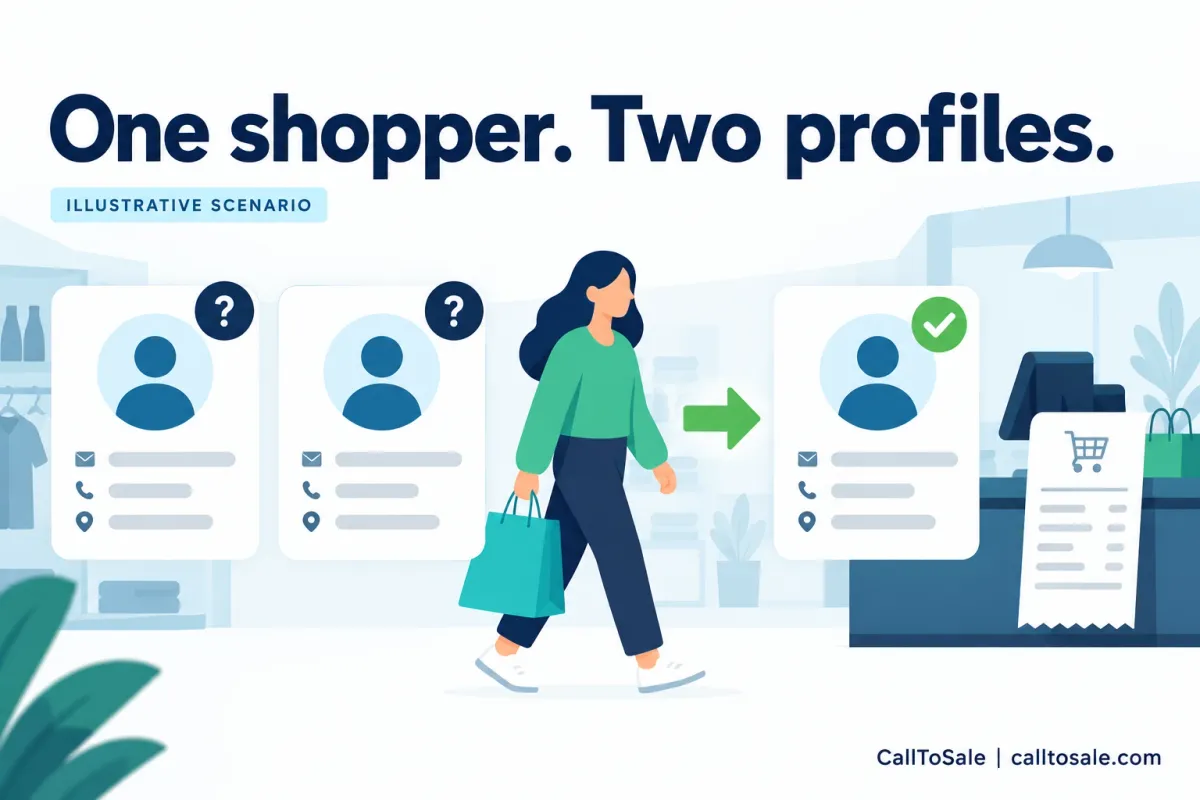
A fictional jewelry shopper submits a website inquiry using an email address. When she later visits the store, a cashier creates a new profile with her mobile number. Her purchase is recorded correctly in Shopify POS, but the original inquiry sits against a different record. The owner sees an unmatched sale and wonders why the customer connection was missed.
Published October 15, 2026. For businesses using Shopify and Shopify POS.
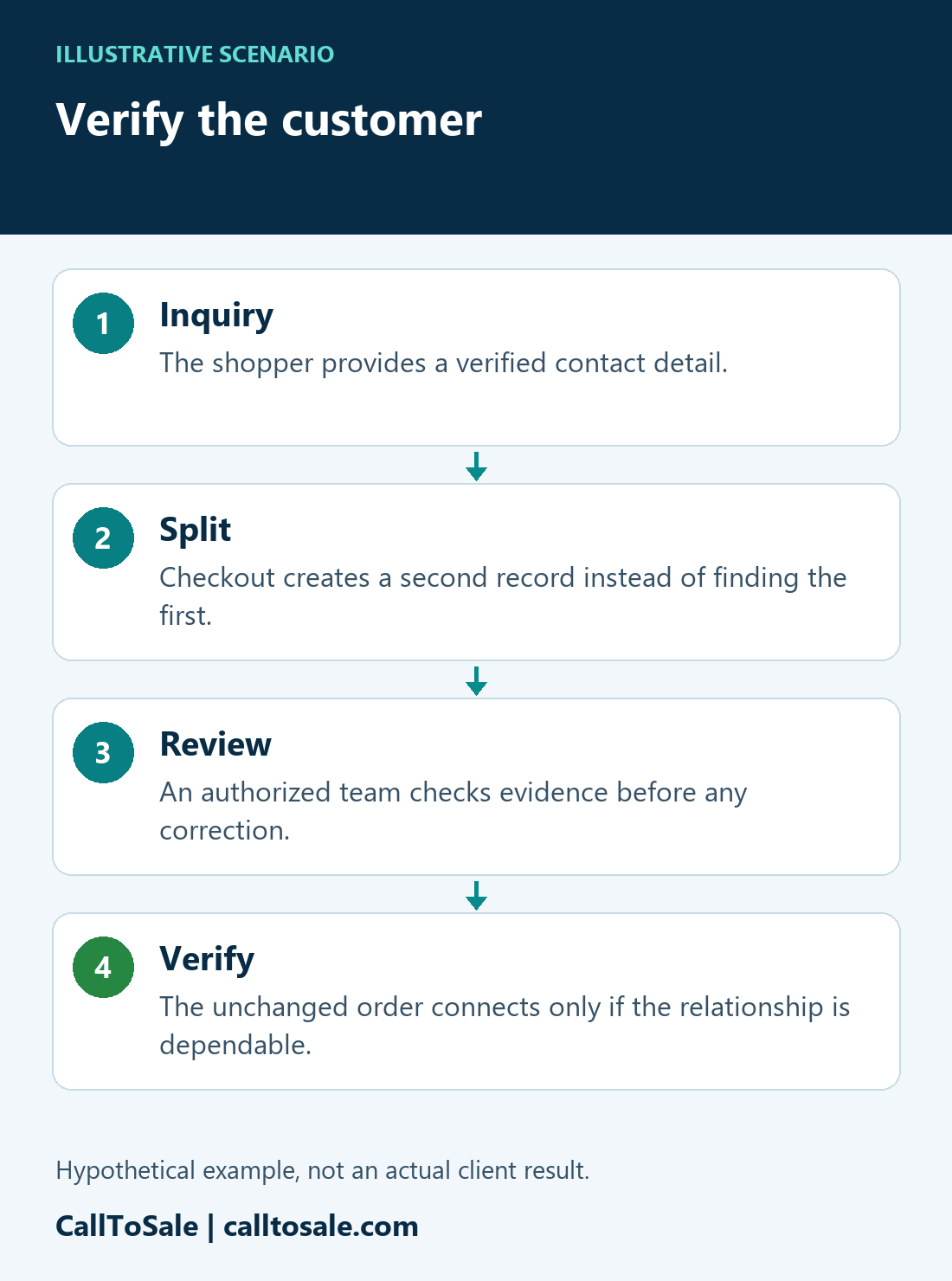
Real Life situations | Illustrative scenarioVerify the customerThe proposed checks in this hypothetical journey.- 1InquiryThe shopper provides a verified contact detail.
- 2SplitCheckout creates a second record instead of finding the first.
- 3ReviewAn authorized team checks evidence before any correction.
- 4VerifyThe unchanged order connects only if the relationship is dependable.
Illustrative scenario, not an actual client result. Matching and reporting depend on available evidence and the configured integration.
Open the full-size scenario infographic
Two records are a lead, not proof of identity
The two profiles might belong to the same shopper, members of one household, or completely different people. A similar name is not sufficient evidence. CallToSale would first inspect the authorized inquiry and order records, the details staff actually verified, and the systems involved. The review should use only the information needed by the responsible team, without copying personal data into public examples or broad troubleshooting notes.
Find where the records diverged
In this scenario, the inquiry record has the confirmed email and product question. The checkout record has a phone number and the completed order. Staff would check whether the buyer can verify the relevant relationship through normal service channels. We would also ask why the cashier did not find the existing profile. A search habit, typo, or different contact detail may explain the split more accurately than an integration failure.
Choose a correction supported by the systems
Any profile correction or merge should follow the current platform process and the business's permissions. We would preserve the actual order and its reference, review which fields could be overwritten, and avoid combining records solely to improve the match rate. A correction to a source record may not automatically update every downstream report. That propagation would need to be tested.
Preserve the customer's preferences
Combining business records should not turn one person's marketing choice into another person's permission. Receipt preferences, inquiry handling, and marketing subscriptions need to remain understandable after a correction. If the purchasing person is a partner or another household member, the team should document the verified relationship rather than pretending the people are interchangeable.
Verify the reporting relationship again
After an approved correction, we would trace the inquiry to the customer and the same Shopify POS order. We would check that the sale appears once, that the old unmatched entry is handled consistently, and that the order value has not changed merely because its customer relationship changed. Any advertising event would still need its own eligibility and destination checks.
Prevent repeated profile splits
The practical improvement would be a short checkout routine: search first, confirm an appropriate detail, inspect possible matches, and attach the correct customer to the actual order. Track the causes of unresolved cases so training addresses the real problem. Some records will remain unmatched, which is more honest than assigning a sale to an uncertain customer.
Related practical guides
Find the missing step in your store
Book a free sales tracking audit to review your inquiry, customer, and Shopify POS order workflow. Explore Real Life situations for more clearly labeled hypothetical examples.