For brick-and-mortar retailers using Shopify and Shopify POS.
A store owner deciding between local SEO and paid ads is often comparing two different ways of reaching nearby shoppers. The useful choice depends on local demand, the offer, operating capacity and what the store can measure. Build a common view of inquiries and purchases before judging one channel from visibility and the other from sales.
Reviewed and updated October 15, 2026.
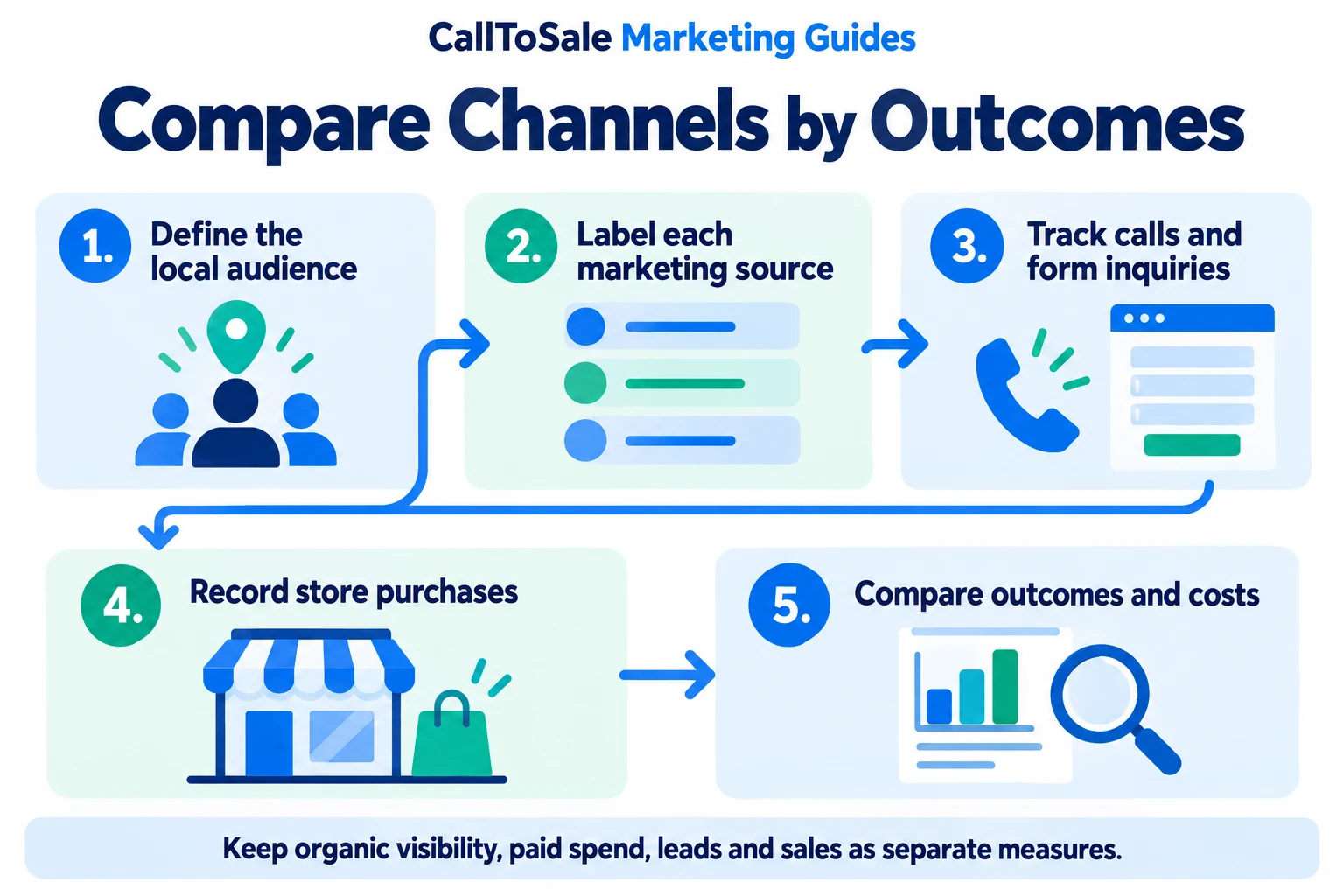
Open the full-size infographic
Give each channel a clear job
Local search content and a useful business profile can help shoppers understand where you are, what you sell and when to visit. Paid campaigns let you test defined messages and offers with a specified spend. They are different investments with different operating demands. Describe the customer problem each effort addresses, such as finding an available product or arranging a showroom consultation.
Fix the information customers need to visit
Check your address, opening hours, contact route and location-specific information. Google says local results depend mainly on relevance, distance and prominence; buying ads does not buy a better organic local ranking. Prioritize accurate information over promises to rank everywhere. A shopper who sees the wrong hours or cannot reach the right store can be lost before any attribution question arises.
Keep source labels consistent
Use a documented naming approach for paid campaigns and supported tagged links. Preserve the distinction between paid, organic, referral and unknown sources in your records. If a customer describes how they found you, retain that as self-reported context rather than silently replacing verified tracking data. Both kinds of information can be useful when their origins remain clear.
Compare business outcomes in parallel
For each channel, review the available inquiries, qualified conversations, appointments and matched purchases. Keep traffic and visibility metrics as supporting information. A source that brings fewer website visits may still produce useful retail inquiries, while a popular article may serve existing customers. Avoid calling either result a revenue success until the corresponding sales evidence supports it.
Account for the different kinds of cost
Paid media has an explicit advertising bill. Local SEO can require content work, photography, profile maintenance and agency or staff time even when there is no charge per organic click. Keep ad-spend ROAS separate from a wider channel-cost comparison. Document which costs are included so one channel does not appear free simply because its effort is booked elsewhere.
Choose the next test from the evidence
If calls are arriving but going unanswered, improve the response process before scaling traffic. If store orders are healthy but customer details are missing, improve the checkout record before declaring the channel unmeasurable. For Shopify POS retailers, linking identifiable inquiries to recorded purchases can add the missing outcome. Use modest, clearly defined tests and review the lag between the first inquiry and the sale.
How CallToSale can help your store
CallToSale reviews the connection between identifiable calls and forms, customer records and purchases recorded in Shopify POS. The standard service requires Shopify and Shopify POS. Your audit confirms the supported integrations, matching requirements and scope for your accounts. Missing identifiers and anonymous purchases can remain unmatched; the workflow does not guarantee attribution or increased revenue.
Keep learning
Further reading
Frequently asked questions
Does paying for Google Ads improve organic local rankings?
Google says businesses cannot pay for a better local ranking. Keep paid visibility and organic local performance distinct.
Is local SEO free?
Organic clicks do not carry an advertising click charge, but content, maintenance and staff or agency work can still cost money.
Should I compare the channels only by website visits?
Include business outcomes such as useful inquiries and matched purchases, with traffic as supporting context.
Can every organic visitor be connected to an in-store purchase?
No. Anonymous visits, missing customer details and unavailable source information can prevent a reliable connection.
Should customer-reported sources replace tracking records?
Keep self-reported information labeled alongside available tracking context so the two are not confused.
What is a useful first improvement?
Make location details accurate and ensure someone owns the response to calls and forms.
Can a lower-traffic channel still produce valuable customers?
Yes. Traffic volume alone does not reveal inquiry quality or the purchases associated with that source.
Where does CallToSale fit?
For suitable Shopify and Shopify POS stores, an audit can assess the connection from identifiable marketing inquiries to recorded purchases.
Find the gaps in your store sales tracking
Request a free Shopify POS sales tracking audit to review your inquiry, customer and order workflow. You can also see how CallToSale works, compare plans or browse the Marketing Guides.