Illustrative scenario. This is a hypothetical example, not an actual client testimonial or documented customer result.
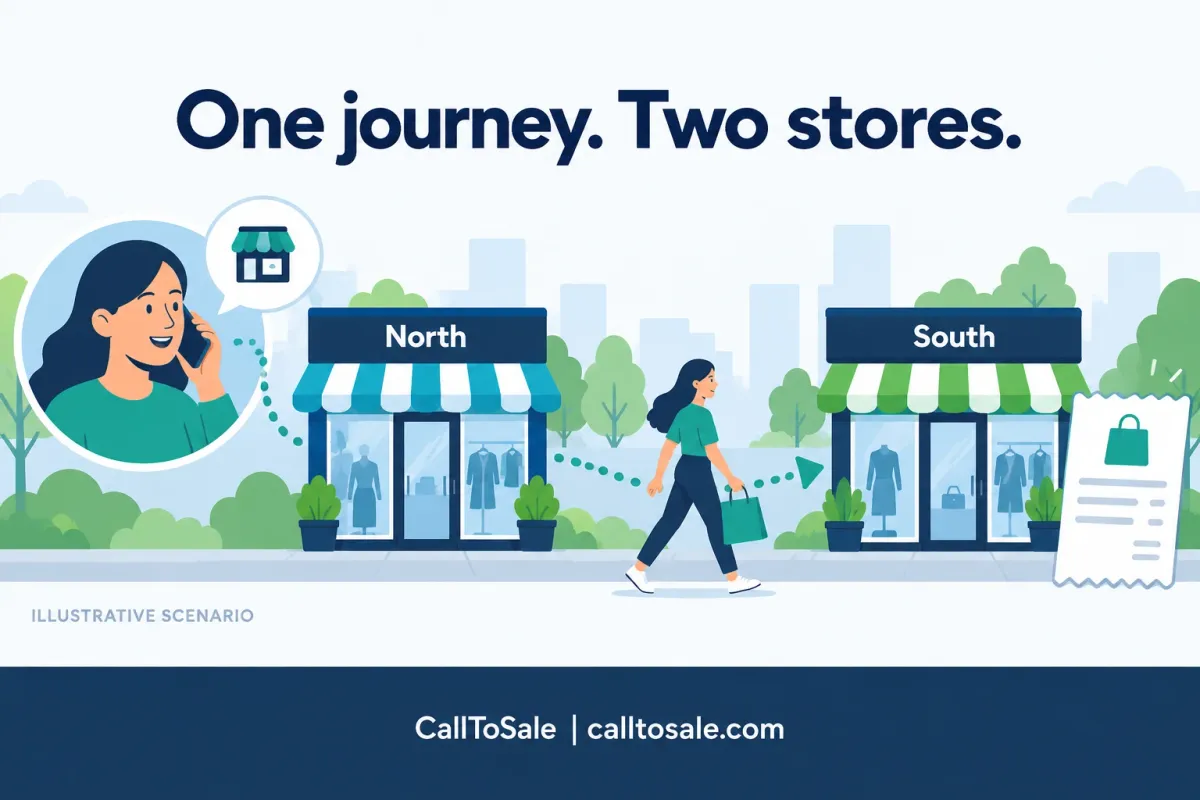
A fictional retailer has two showrooms. A shopper calls the north location after seeing an advertisement, then buys from the south location because it has the right product available. The north manager wants credit for answering the inquiry. The south manager wants the sale in the store total. The marketing team wants to know which campaign started the journey. All three questions are reasonable, but they should not produce three company sales.
Published October 15, 2026. For businesses using Shopify and Shopify POS.
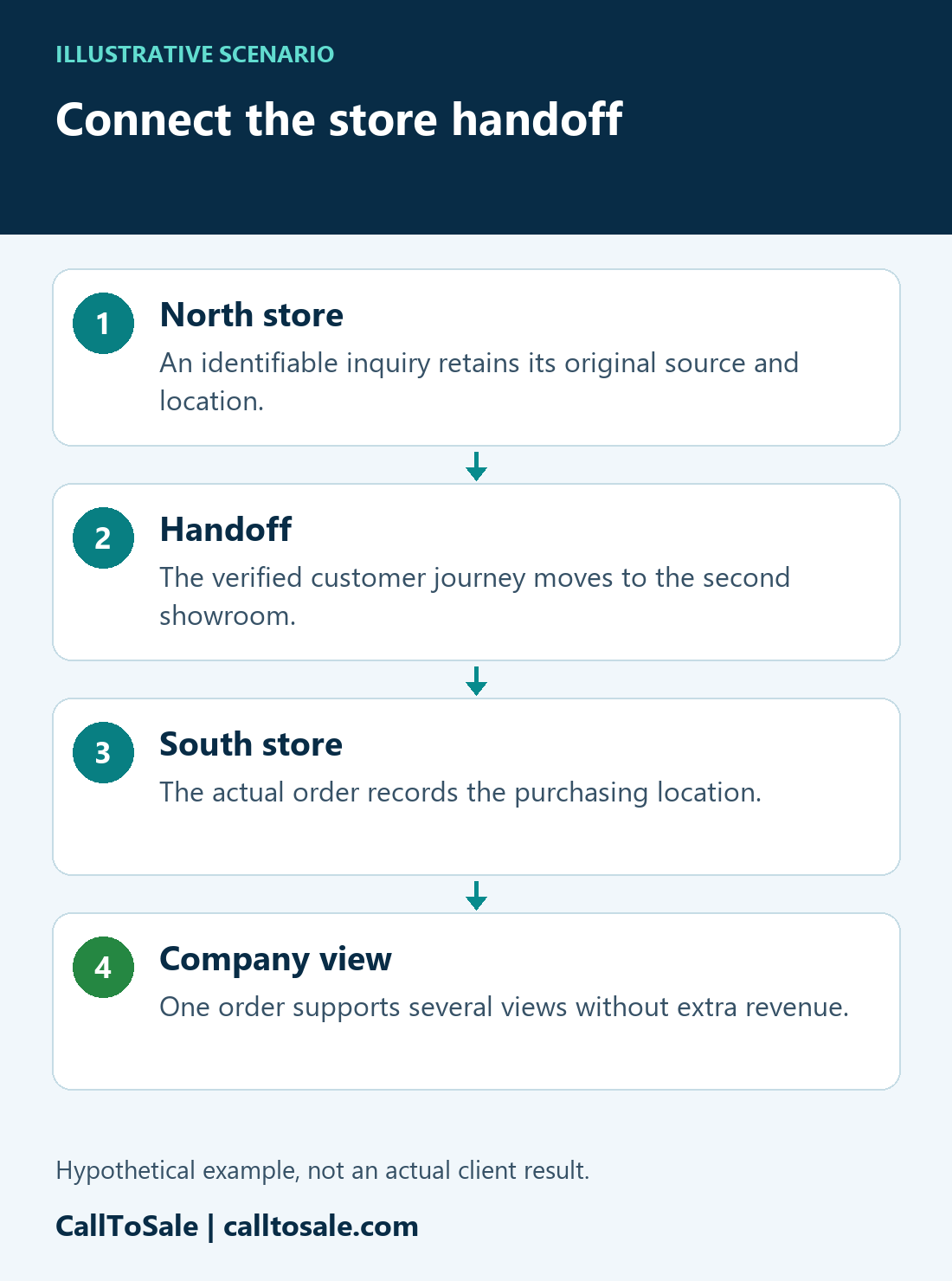
Real Life situations | Illustrative scenarioConnect the store handoffThe proposed checks in this hypothetical journey.- 1North storeAn identifiable inquiry retains its original source and location.
- 2HandoffThe verified customer journey moves to the second showroom.
- 3South storeThe actual order records the purchasing location.
- 4Company viewOne order supports several views without extra revenue.
Illustrative scenario, not an actual client result. Matching and reporting depend on available evidence and the configured integration.
Open the full-size scenario infographic
Separate the questions before allocating credit
CallToSale would identify the original inquiry location, the location that recorded the purchase, and the available marketing source. Those are different dimensions of one journey. Store operations may need to know who served the shopper, while campaign analysis needs source context. A company-wide revenue total should remain grounded in the actual order rather than adding competing credit claims.
Preserve the first conversation
The north employee would keep the identifiable inquiry and product request with the verified customer record. If staff transfer the request or recommend the other showroom, the handoff should identify the next action and responsible team. The shopper should not have to become an entirely unrelated contact just because the purchase location changes. Access should still follow the organization's permissions.
Let the order identify where the purchase happened
At the south store, staff would find and verify the correct customer, attach that customer to the Shopify POS order, and preserve the actual purchasing location. We would inspect the location fields and supported account connections instead of deriving location from the employee's memory. If different shops use separate systems, the audit must establish whether the standard workflow can connect them or needs additional work.
Build views that answer one question at a time
The proposed report would show sales by purchasing location, inquiry volumes by inquiry location, and eligible matched revenue by marketing source. A cross-location view would connect those dimensions using the same stable order reference. Adding the two store-credit views together as extra company revenue would be incorrect. Unknown source information would remain unknown even when the location relationship is clear.
Test transfers and exceptions
We would trace a same-store purchase, a verified cross-store purchase, a cancelled transfer, and an order with an uncertain customer relationship. The checks would confirm that each qualifying purchase appears once in the company view. Refunds would need the appropriate original order relationship. Event delivery to advertising platforms would be reviewed separately from internal store allocation.
Improve cooperation without changing the books
A clear handoff can acknowledge the north team's work while keeping the south store's order accurate. The fictional owner could then see where inventory and service contributed to a sale. This is a reporting design example, not a recommendation to change staff commissions or accounting rules without a separate business decision.
Related practical guides
Find the missing step in your store
Book a free sales tracking audit to review your inquiry, customer, and Shopify POS order workflow. Explore Real Life situations for more clearly labeled hypothetical examples.