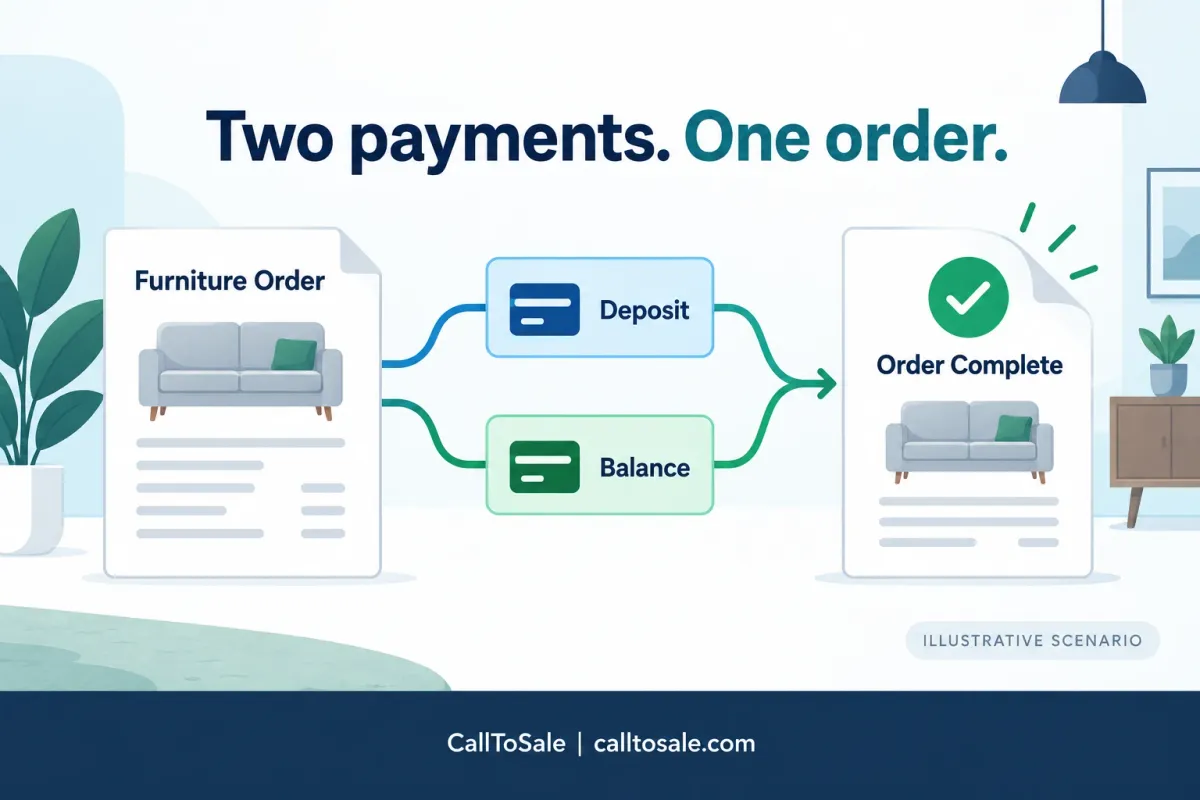
Illustrative scenario. This is a hypothetical example, not an actual client testimonial or documented customer result.
A fictional furniture showroom accepts a deposit on a dining set. Several weeks later, the customer pays the balance before delivery. Both payment notifications reach a reporting workflow. The marketing dashboard records a sale each time and appears to show two purchases. The owner knows there was only one dining set. The investigation starts with the difference between collecting money and recognizing a qualifying order.
Published October 15, 2026. For businesses using Shopify and Shopify POS.
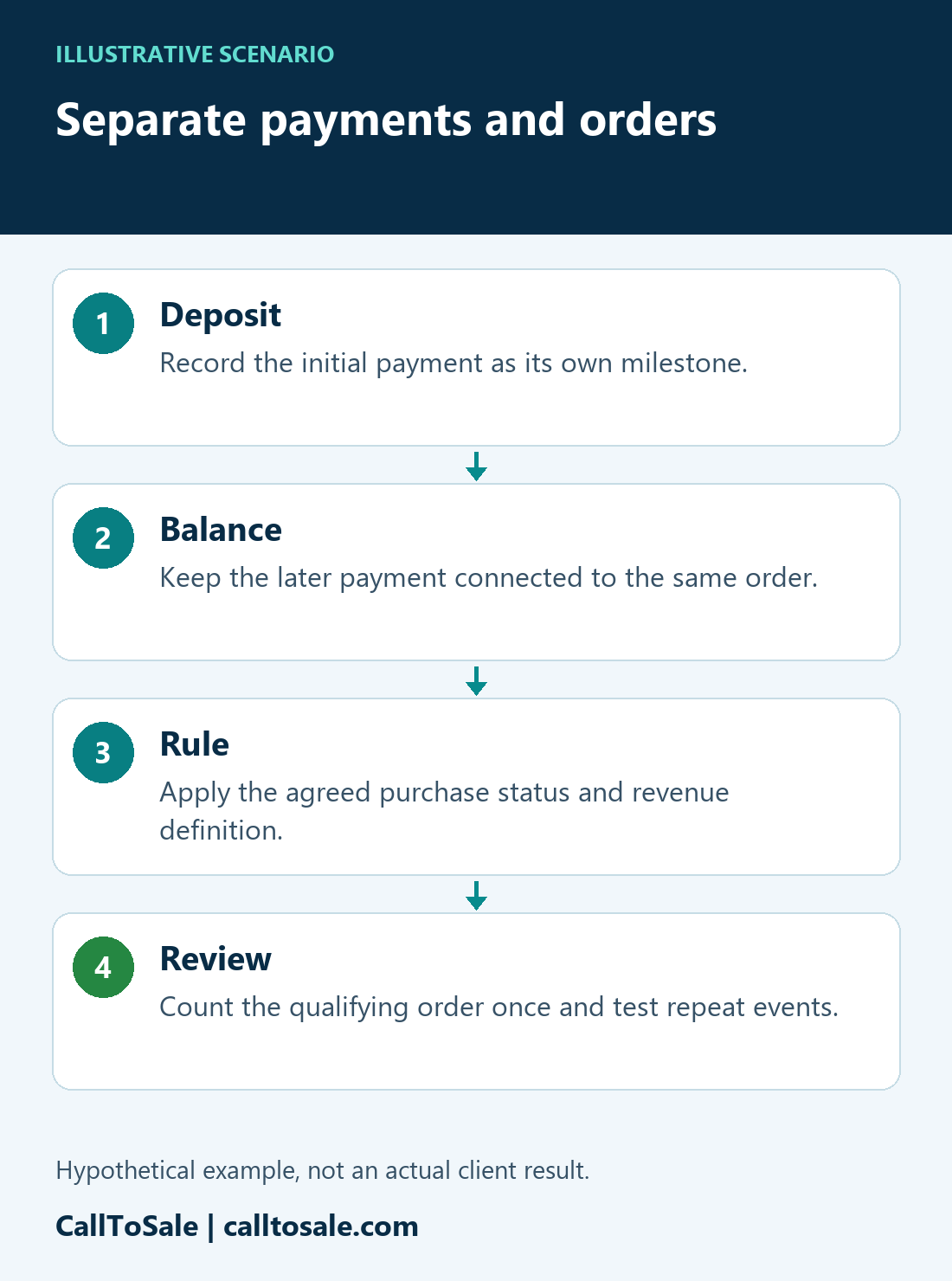
Real Life situations | Illustrative scenarioSeparate payments and ordersThe proposed checks in this hypothetical journey.- 1DepositRecord the initial payment as its own milestone.
- 2BalanceKeep the later payment connected to the same order.
- 3RuleApply the agreed purchase status and revenue definition.
- 4ReviewCount the qualifying order once and test repeat events.
Illustrative scenario, not an actual client result. Matching and reporting depend on available evidence and the configured integration.
Open the full-size scenario infographic
Agree what the purchase event represents
Some businesses review paid orders, others completed orders, and some track deposits as a separate milestone. CallToSale would ask the store to document its intended event and revenue value before changing anything. A deposit can be useful information without being another full-value purchase. The same definition needs to apply to the historical comparison and current report.
Inspect the order and payment references
We would trace the actual Shopify POS order and any related payments using the supported records available in the account. In this fictional case, two payment notifications each trigger a full-order event because the workflow has no reliable way to recognize that they concern the same purchase. The first correction would be to preserve the order reference across those events, rather than reducing the customer's sales history by guesswork.
Separate progress from the final outcome
The proposed design would keep deposit received and balance received as distinct operational milestones. The qualifying purchase event would follow the store's agreed rule and reference the order once. If the business instead wants cash-flow reporting, it would sum actual collected amounts under a clearly labeled payment measure. That should not silently replace an order-revenue measure used for campaign analysis.
Test the awkward cases
A useful test would include a deposit, final payment, repeat notification, cancelled order, and a deposit transferred to a revised order. The team would check what its actual Shopify workflow supports rather than assuming every deposit feature behaves the same way. Corrections and cancellations should remain traceable. A replacement reference must not make an old purchase look like a second unrelated sale.
Review destination behavior separately
If purchase events are sent to a supported advertising connection, we would verify the destination's identity, value, and adjustment requirements. It may not be appropriate simply to upload the corrected purchase again. Internal reporting can show the agreed order outcome while destination feedback is investigated. Preserving an audit trail helps explain why those views may differ.
What the owner would gain
The intended result would be one understandable order journey with its payment milestones visible. It is not a claim that revenue increased. The improvement is a report that distinguishes one purchase from several steps in paying for it, allowing marketing decisions to use the outcome the owner actually intended to measure.
Related practical guides
Find the missing step in your store
Book a free sales tracking audit to review your inquiry, customer, and Shopify POS order workflow. Explore Real Life situations for more clearly labeled hypothetical examples.