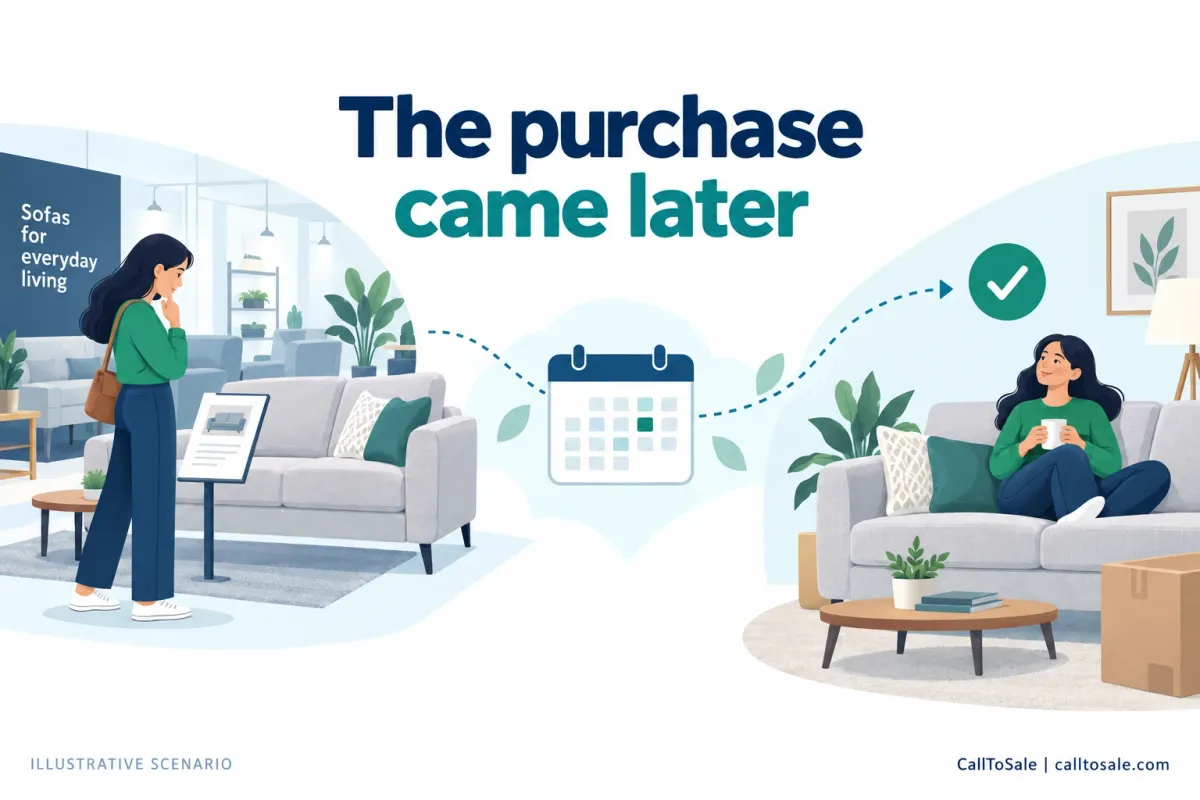
Illustrative scenario. This is a hypothetical example, not an actual client testimonial or documented customer result.
A fictional outdoor living showroom runs an early-season campaign for patio furniture. Shoppers request dimensions, discuss delivery, and return with family members before buying. At the end of the first week, the owner sees advertising spend and several inquiries but little matched purchase revenue. The campaign looks disappointing. The question is whether the shoppers rejected the offer or simply have not decided yet.
Published October 15, 2026. For businesses using Shopify and Shopify POS.
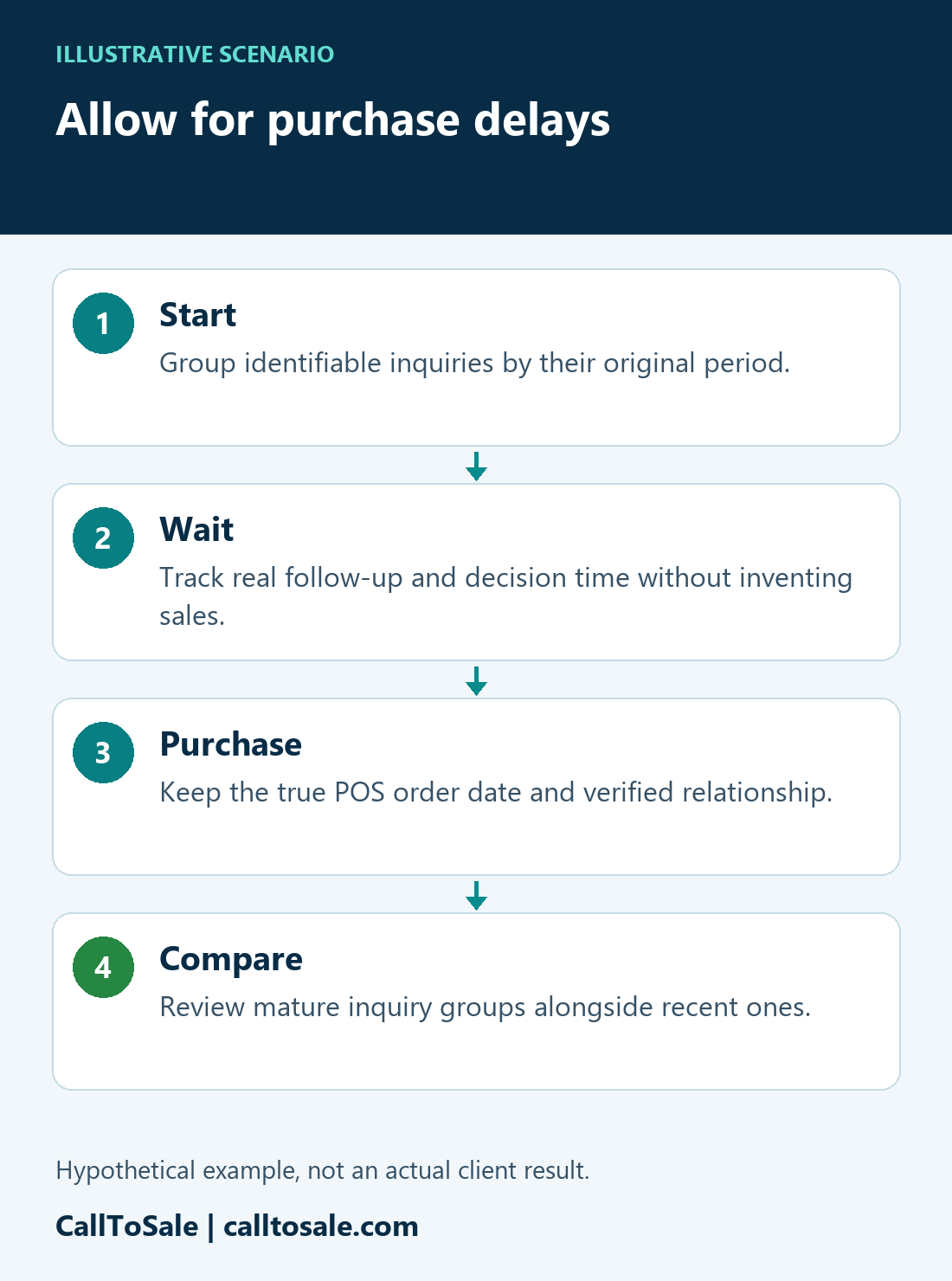
Real Life situations | Illustrative scenarioAllow for purchase delaysThe proposed checks in this hypothetical journey.- 1StartGroup identifiable inquiries by their original period.
- 2WaitTrack real follow-up and decision time without inventing sales.
- 3PurchaseKeep the true POS order date and verified relationship.
- 4CompareReview mature inquiry groups alongside recent ones.
Illustrative scenario, not an actual client result. Matching and reporting depend on available evidence and the configured integration.
Open the full-size scenario infographic
A short review period can hide a longer decision
CallToSale would begin with the dates behind the report. A spend period, inquiry period, and purchase period need not contain the same customer journeys. Comparing this week's spend only with this week's purchases may be useful for one question, but it does not fully describe what happened to the people acquired this week. We would avoid declaring a campaign successful just because delayed purchases are possible.
Build an inquiry cohort
The team would group identifiable inquiries by the period in which they began and follow their verified purchase outcomes over time. That view would be kept separate from revenue booked on each calendar day. The showroom would document which inquiry starts a journey, how repeat contacts are handled, and what qualifies as a completed purchase. Changing those definitions halfway through the comparison would make the apparent trend unreliable.
Keep follow-up grounded in the shopper's needs
For the fictional patio shopper, useful follow-up could answer a delivery question or confirm a product specification. HighLevel can keep the conversation and next step organized in the configured workflow. Staff should not mark a purchase merely because an opportunity seems promising. The Shopify POS order remains the evidence that a sale occurred, with the correct customer relationship verified at checkout.
Review older groups alongside new ones
We would compare the latest inquiry group with older groups that have had more time to produce purchases. Differences in stock, promotions, seasonality, and staffing would be noted. A late purchase should retain its real order date. Moving dates to make a campaign look better would obscure the timing problem instead of explaining it. Advertising platforms also apply their own attribution rules and windows.
What would support a different decision?
The evidence could show that comparable inquiries often purchase later, that the newest group is still unusually weak, or that many orders cannot be connected because customer details are missing. Those are different findings with different next steps. The owner might continue a limited test, change follow-up, review inventory, or fix capture. There is no assumed revenue lift or automatic reason to increase spend.
Make the lag visible in the regular review
Add inquiry age and time-to-purchase observations to the marketing discussion. Keep total sales, cohort outcomes, matched revenue, and unmatched orders visible together. The purpose is to distinguish incomplete evidence from poor results, while letting mature results inform the next budget decision.
Related practical guides
Find the missing step in your store
Book a free sales tracking audit to review your inquiry, customer, and Shopify POS order workflow. Explore Real Life situations for more clearly labeled hypothetical examples.