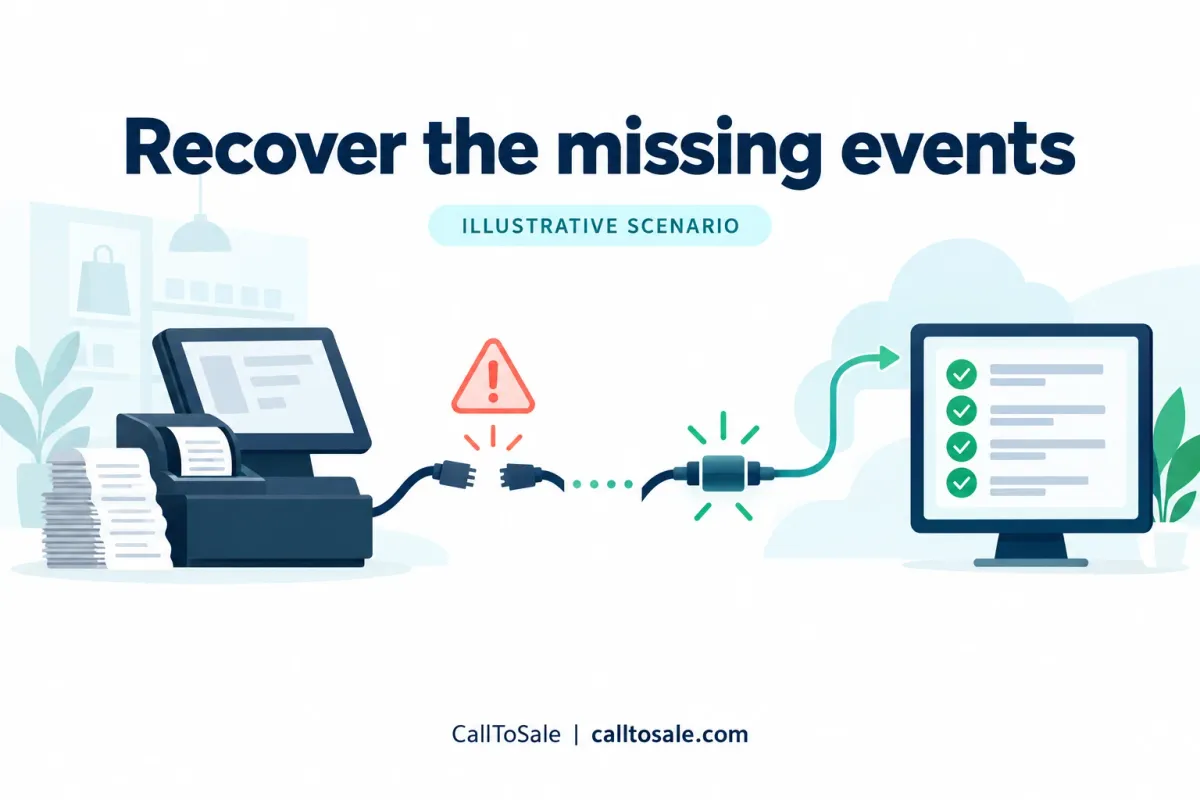
Illustrative scenario. This is a hypothetical example, not an actual client testimonial or documented customer result.
A fictional multi-category retailer notices a sudden drop in matched purchase events. The store has been trading normally, staff have not changed their checkout routine, and Shopify POS still contains completed orders. The reporting connection stopped delivering some events after an account connection changed. The owner asks whether the missing week can simply be uploaded again. First, the team needs to know what is actually missing.
Published October 15, 2026. For businesses using Shopify and Shopify POS.
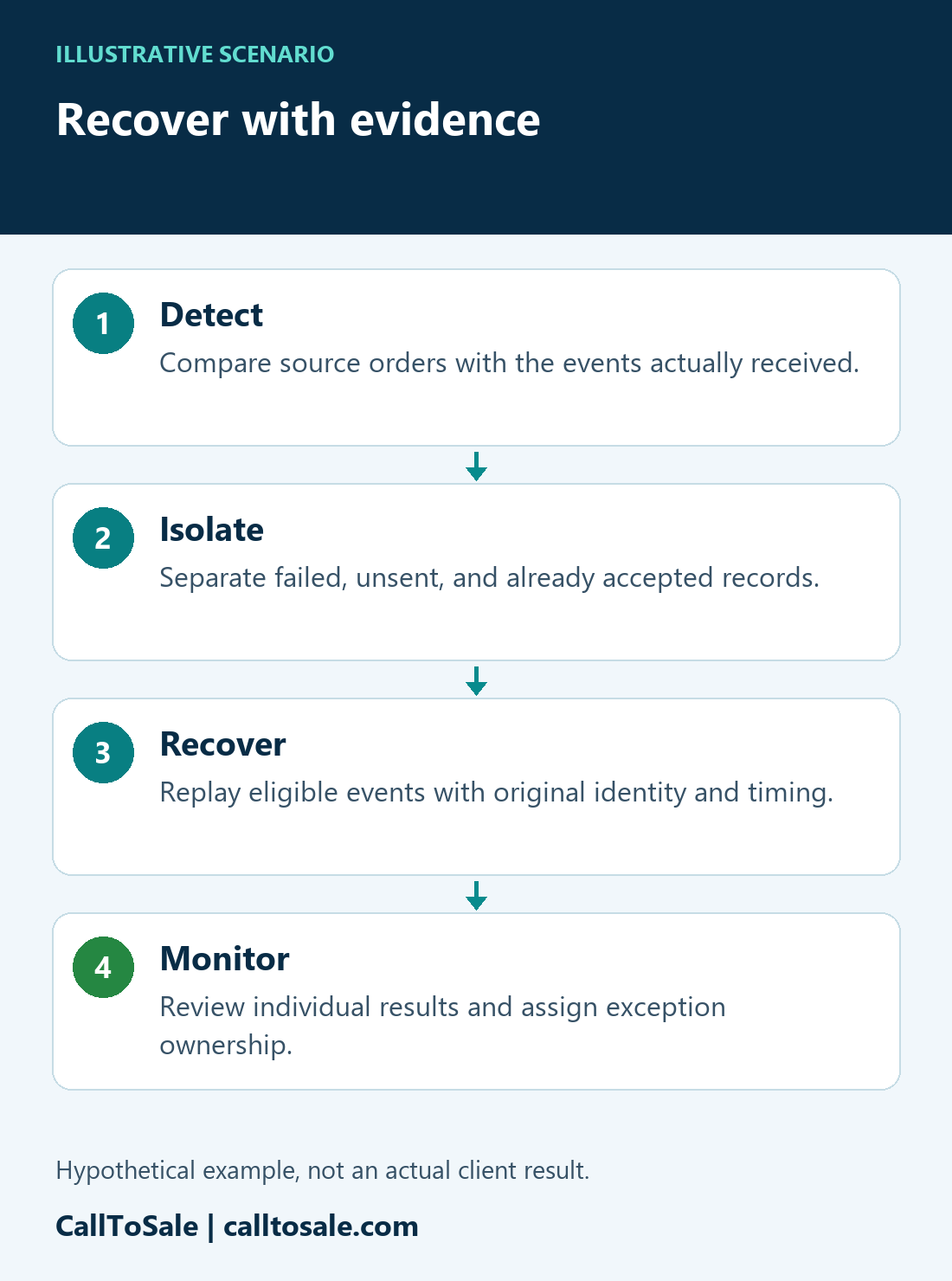
Real Life situations | Illustrative scenarioRecover with evidenceThe proposed checks in this hypothetical journey.- 1DetectCompare source orders with the events actually received.
- 2IsolateSeparate failed, unsent, and already accepted records.
- 3RecoverReplay eligible events with original identity and timing.
- 4MonitorReview individual results and assign exception ownership.
Illustrative scenario, not an actual client result. Matching and reporting depend on available evidence and the configured integration.
Open the full-size scenario infographic
Start with the source of record
CallToSale would compare the relevant Shopify orders with the integration's receipt and delivery logs. A quiet destination dashboard alone cannot establish whether an order never arrived, failed validation, or was accepted without the expected campaign credit. The investigation would define the affected time range and the purchase rule before constructing a recovery list. Valid store sales should remain in the store report even while destination reporting is incomplete.
Find the boundary of the failure
In this scenario, an account connection changed and subsequent delivery attempts failed. We would inspect the available error feedback and confirm the intended destination account and permissions through the normal authorized process. We would not work around access controls or copy credentials into diagnostic notes. The repair would address the specific connection issue while preserving the original records for reconciliation.
Separate missing events from previously delivered events
A recovery list would identify qualifying orders, their stable references, original purchase times, and known delivery outcomes. Already accepted events should not be blindly mixed with genuinely unsent ones. Orders that lack a verified customer relationship or required source evidence belong in an exception group. The outage does not create information that was never captured.
Check eligibility before replaying anything
A historical purchase must still meet the destination's current requirements and relevant timing limits. We would preserve the real conversion time and agreed value. A record that is no longer eligible should be documented rather than made to appear recent. Supported adjustments may need separate handling from new submissions, particularly for orders that were later refunded or cancelled.
Recover in a small, traceable batch
After repairing and testing the connection, the team would send a limited authorized batch through the supported route. Each event would retain the identity needed for reliable repeat handling. We would inspect individual results and reconcile them with the recovery list before continuing. A successful replay response does not guarantee that all recovered events receive advertising credit.
Add a signal before the next monthly review
The proposed monitoring would compare source-order volumes, received events, exceptions, and delivery outcomes over consistent periods. Alerts should distinguish a closed store from an unexpectedly silent integration where possible. Assigning an owner to unresolved failures matters as much as the alert itself. This scenario claims no recovered revenue amount; it describes the evidence required for a trustworthy recovery.
Related practical guides
Official platform references
Find the missing step in your store
Book a free sales tracking audit to review your inquiry, customer, and Shopify POS order workflow. Explore Real Life situations for more clearly labeled hypothetical examples.