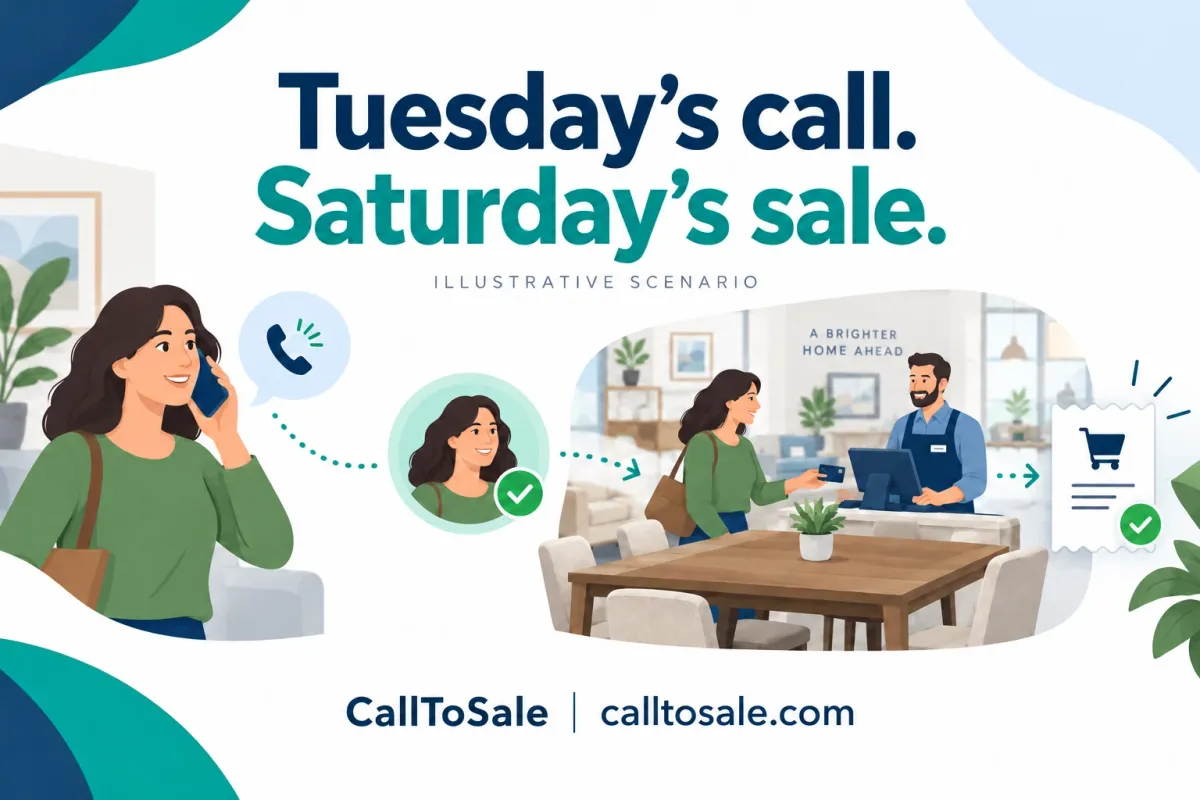
Illustrative scenario. This is a hypothetical example, not an actual client testimonial or documented customer result.
On Tuesday, a shopper clicks an ad for a furniture showroom, browses dining tables, and calls to ask whether one is on display. An employee answers her questions. She might stop by at the weekend. On Saturday, she arrives with her partner, chooses a different table, and pays at the Shopify POS register. The store records a purchase. The call log records an inquiry. What would connect the two?
Published October 15, 2026. For businesses using Shopify and Shopify POS.
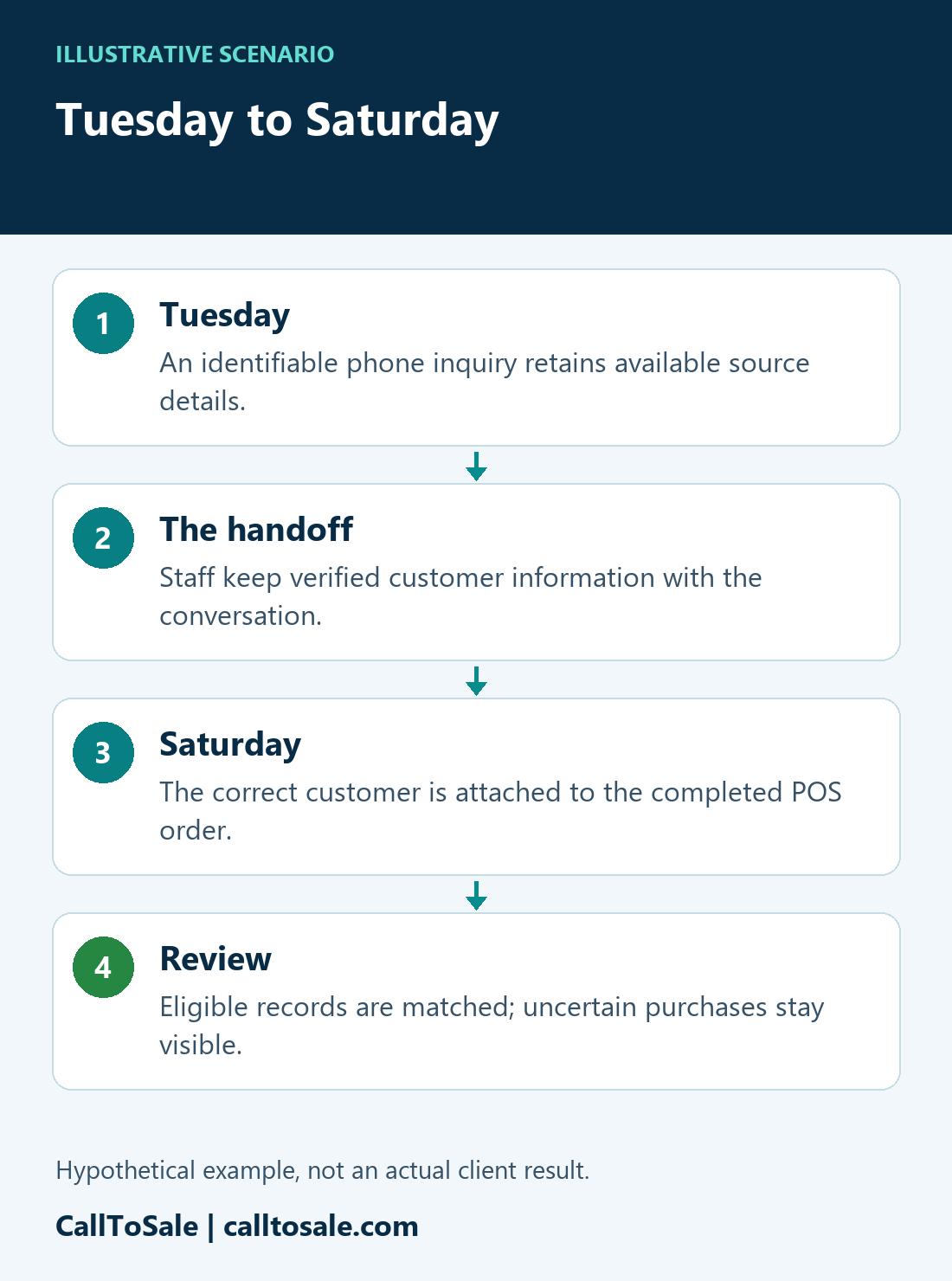
Real Life situations | Illustrative scenarioTuesday to SaturdayThe proposed checks in this hypothetical journey.- 1TuesdayAn identifiable phone inquiry retains available source details.
- 2The handoffStaff keep verified customer information with the conversation.
- 3SaturdayThe correct customer is attached to the completed POS order.
- 4ReviewEligible records are matched; uncertain purchases stay visible.
Illustrative scenario, not an actual client result. Matching and reporting depend on available evidence and the configured integration.
Open the full-size scenario infographic
The sale exists, but its earlier journey is unclear
Imagine the owner reviewing the week. Advertising reports show inquiries, while Shopify records store orders. A similar name in both systems is a clue, not enough evidence to assign the sale. The problem is the missing relationship between the conversation and purchase, rather than missing money in the store books. Treating every caller as a buyer would create a different reporting error.
Tuesday needs a useful handoff
CallToSale would first inspect the available call-source details and the customer information kept with the inquiry. In this example, CallRail supplies supported call details and HighLevel keeps the identifiable contact and follow-up together. The employee could offer product information or a quote, confirming the contact detail needed to deliver it. Staff would search for an existing record before creating another one. Marketing subscriptions would remain separate from handling the inquiry.
Saturday needs the correct customer on the order
At checkout, the employee would verify the purchasing customer before attaching the appropriate profile to the actual Shopify POS order. Because a partner made the payment, the store would confirm the relationship instead of assuming it. Choosing another table does not automatically break the journey: the recorded order describes what sold, while the inquiry explains the earlier conversation. If the relationship cannot be verified, the purchase should remain unmatched.
What we would test before reporting a match
We would follow the authorized example from the original inquiry to the contact and completed order. The checks include available source information, the customer relationship, order reference, purchase status, time, currency, and agreed revenue value. We would also confirm that another call or payment cannot create an extra purchase. Eligible records may be connected in the configured workflow; this is a tested relationship, not a guess based on a positive conversation.
What a verified connection would change
A successful test would let the owner see that the inquiry was followed by a recorded sale. It would not prove that the advertisement alone caused the purchase. Reviews, price, recommendations, and the showroom experience may also matter. Internal matching should remain distinct from any purchase credit shown by an advertising platform. An accepted advertising event does not guarantee attribution.
A practical next step for the store
Choose one recent inquiry and trace it through the same handoff. Record where the evidence is dependable and where it stops. Give someone responsibility for unresolved records. The useful outcome is a repeatable process that explains more journeys while keeping the limits visible, rather than forcing every purchase to have a campaign source.
Related practical guides
Find the missing step in your store
Book a free sales tracking audit to review your inquiry, customer, and Shopify POS order workflow. Explore Real Life situations for more clearly labeled hypothetical examples.